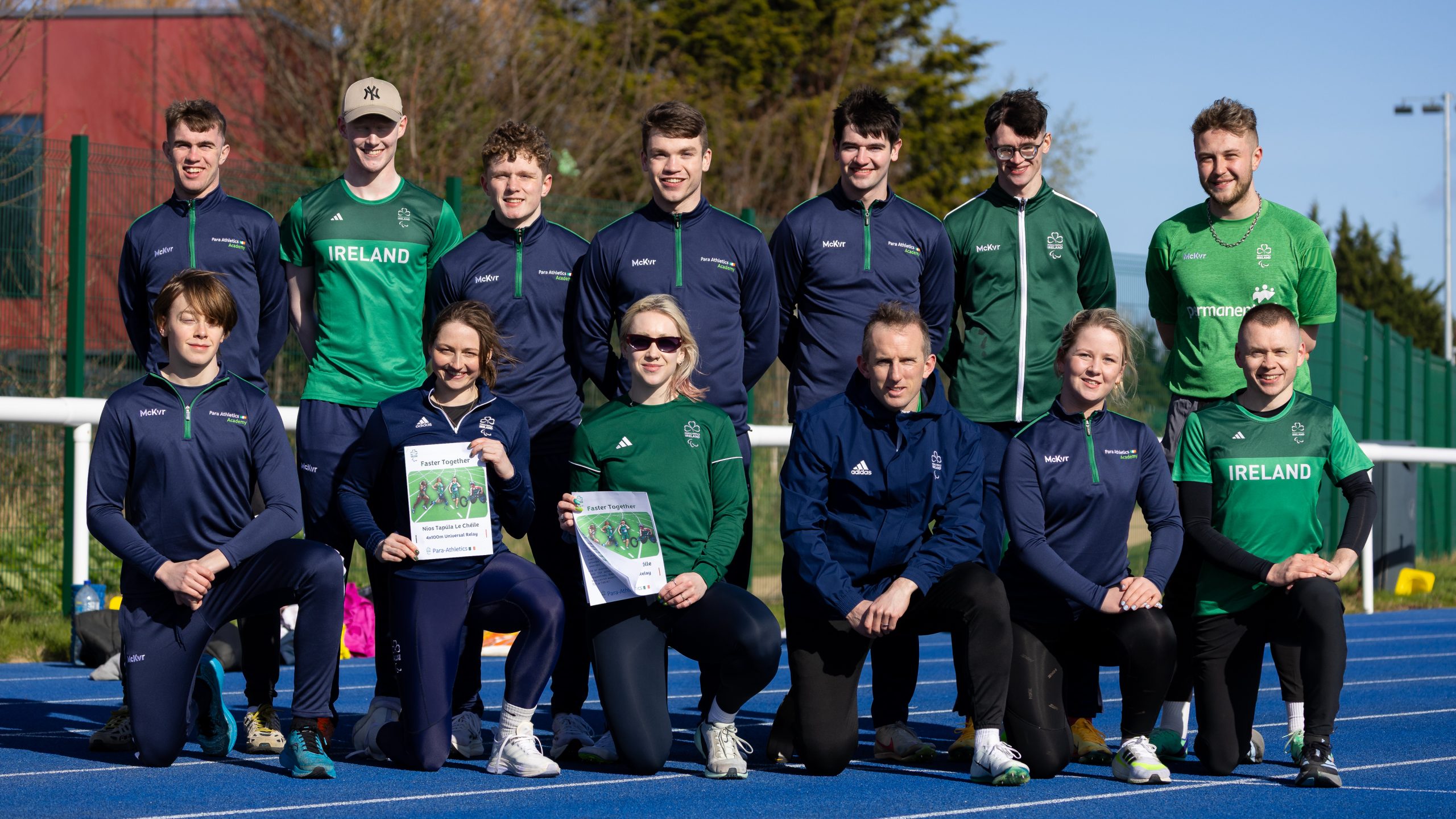
Paralympics Ireland has launched Faster Together – Níos Tapúla Le Chéile, a new initiative focused on developing a 4x100m Universal Relay programme for Ireland.
The programme will begin in 2026, with a structured approach aimed at introducing the event to athletes and coaches, while laying the foundations for future international competition.
The 4x100m Universal Relay is one of the most distinctive events in Para Athletics, bringing together athletes with different classifications to compete as a single team. Each relay team is made up of four athletes, two male and two female, competing over 100 metres each.
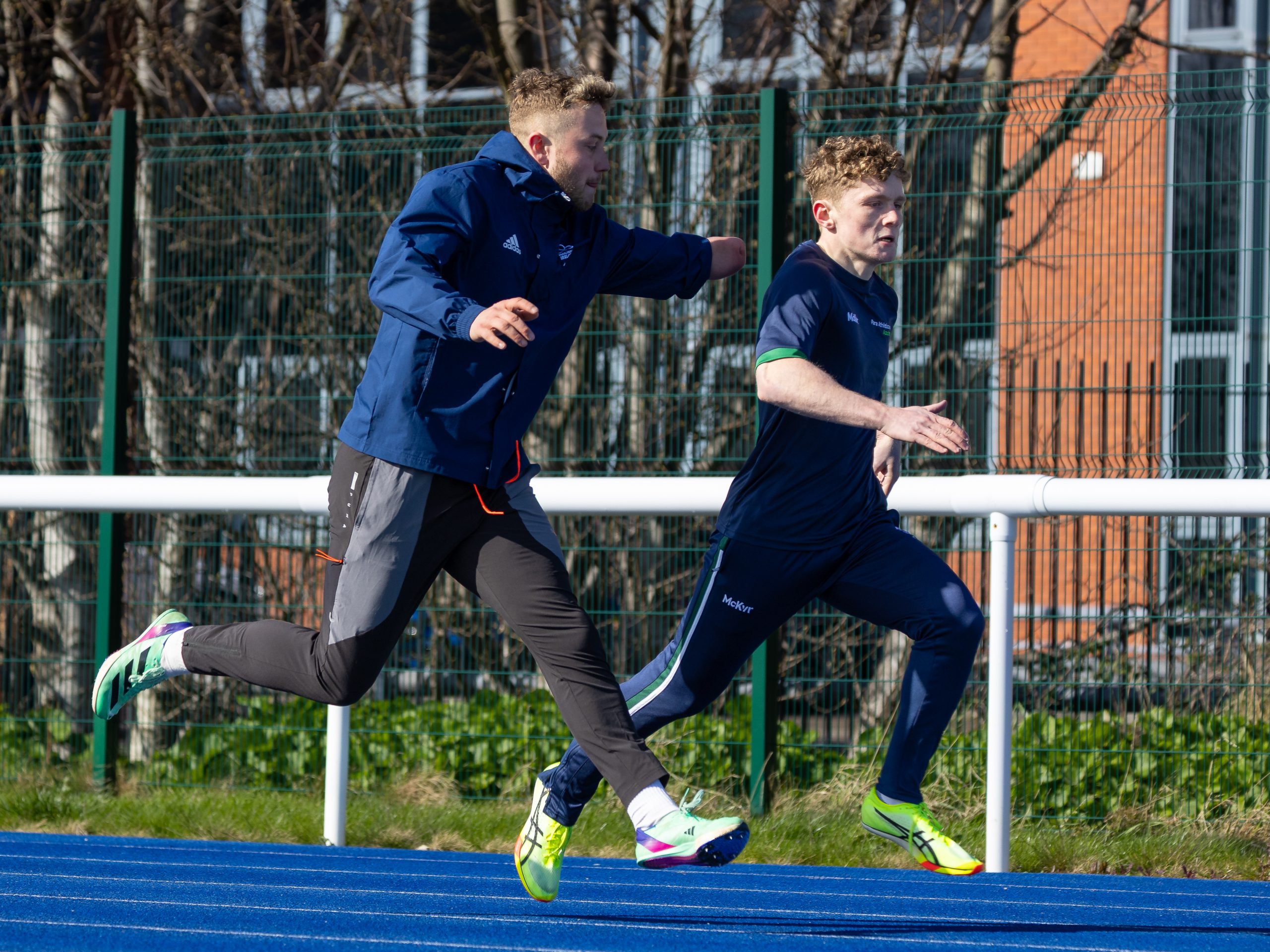
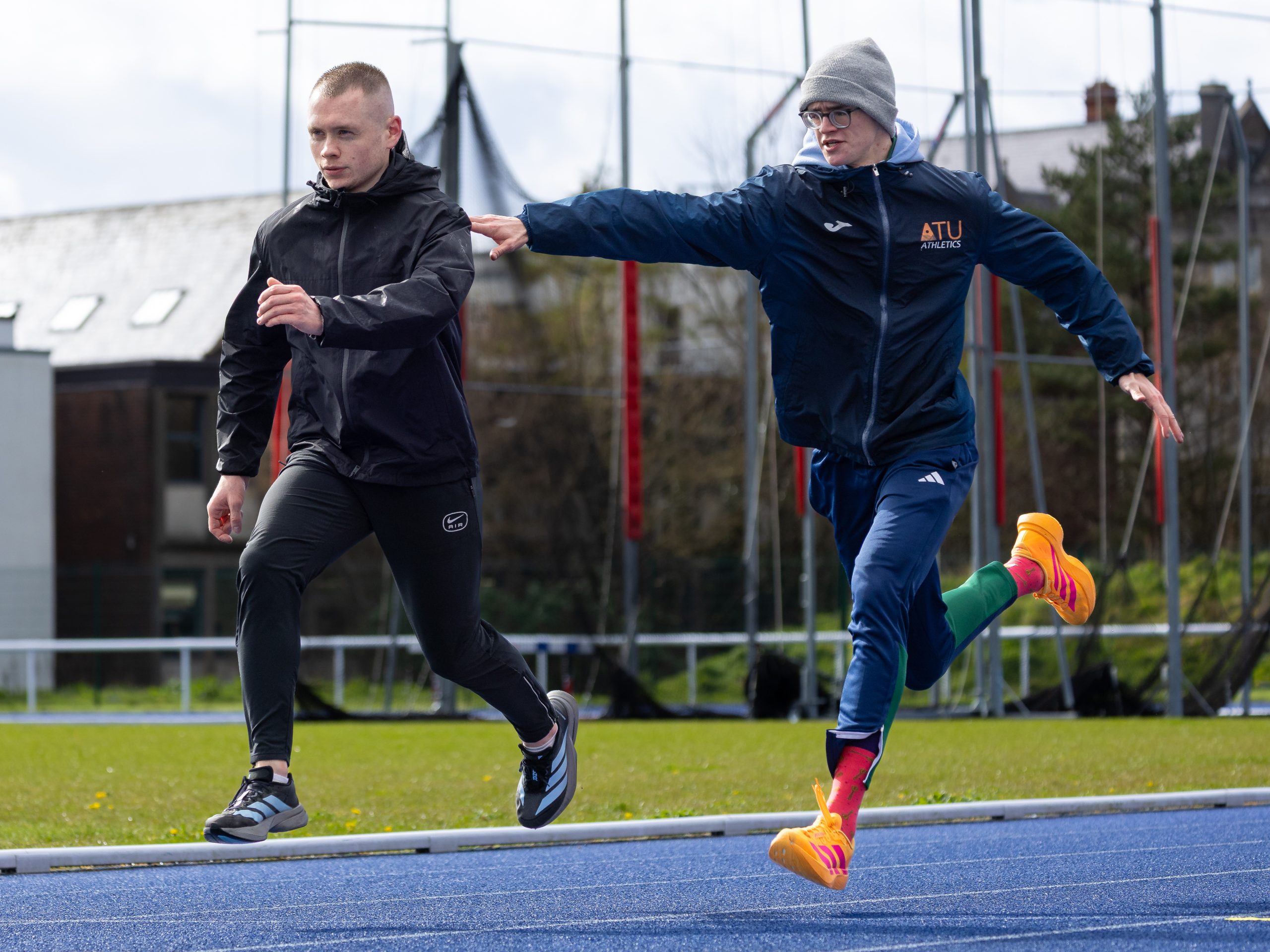
Unlike traditional relays, no baton is used. Instead, athletes complete a physical tag within the designated take-over zone to pass between legs.
The event follows a fixed running order. A visually impaired athlete runs the opening leg, followed by an athlete with limb difference, then an athlete with coordination impairment such as cerebral palsy, with the final leg completed by a wheelchair racer.
As part of the initial rollout, Paralympics Ireland will focus on achievable programme goals for the 2026 season. These include selecting a relay squad, delivering two dedicated squad sessions, identifying a World Para Athletics approved competition opportunity, and recording a time to register on official rankings.
The initiative is designed to bring together athletes from across the Para Athletics system, combining speed, skill and coordination within a structured team environment.
As the programme develops, further targets and selection policies will be introduced in line with progress and future competition opportunities.
What it is:
- A mixed Para athletics relay with 4 athletes, 4x100m
- Each team must include a range of impairments and classifications
- Typically includes ambulant athletes + wheelchair racers
- Order of runners is structured to meet classification rules
Why it exists:
- Created to bring different impairment groups into one team event
- Adds a true team dynamic to Para Athletics (which is mostly individual)
- Designed to be simple to understand and exciting to watch
History:
- Introduced by the International Paralympic Committee (IPC) in the 2010s
- First appeared at a major level at the 2015 World Para Athletics Championships (Doha)
- Made its Paralympic debut at Rio 2016
- Has been included in World Championships and Paralympic Games since
How it works:
- Teams must meet a points/classification system (to ensure fairness)
- Athletes are grouped broadly (e.g. wheelchair, limb deficiency, coordination impairments, visual impairment)
- Baton exchanges happen in standard 4x100m zones
- Strategy is key – order of athletes can decide races
Why it matters:
- One of the most inclusive events in Para athletics
- Showcases the full spectrum of Paralympic sport in one race
- Often one of the most engaging events for spectators