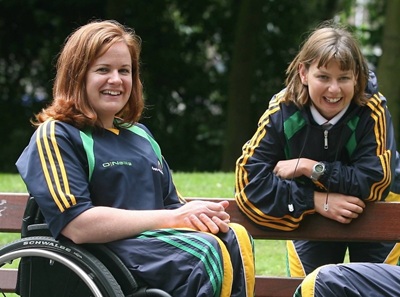
As Vice President of Paralympics Ireland and a six-time Paralympian, Patrice Dockery is one of Ireland’s most respected figures within the Paralympic movement. Representing Ireland across six Paralympic Games and competing internationally for more than two decades, Dockery enjoyed a remarkable career at the highest level of Para athletics before continuing her involvement in sport through leadership and advocacy.
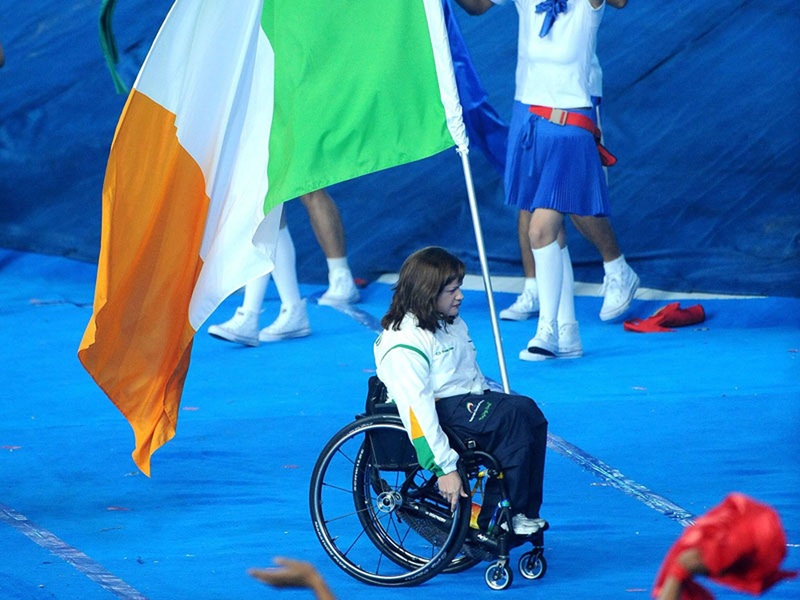
Dockery made her Paralympic debut at just 17 years of age and went on to represent Ireland at six consecutive Paralympic Games. In recognition of her achievements and standing within the team, she was selected as Ireland’s flag bearer for the Opening Ceremony of the Beijing Paralympic Games a proud moment in a career that spanned more than twenty years on the international stage.
Throughout that time, she competed against the world’s best athletes while also playing an important role in raising the profile of Paralympic sport in Ireland.
Today, through her role as Vice President of Paralympics Ireland, Dockery continues to support the development of the Paralympic movement and the athletes who will represent Ireland in the years to come.
On International Women’s Day, she reflects on the importance of female leadership in sport, the mentors who shaped her career, and the message she would share with young girls with disabilities considering getting involved in sport.
We caught up with Paralympics Ireland Vice President and six-time Paralympian Patrice Dockery to reflect on her journey in sport, the mentors who shaped her career, and why representation and leadership from women continues to matter across the Paralympic movement.
What does International Women’s Day mean to you personally and within the Paralympic movement?
International Women’s Day is a great opportunity for us in Paralympics Ireland to highlight and celebrate the fantastic female leaders we currently have within our organisation.
It’s a moment to acknowledge the incredible work being done by so many women across the movement, including our staff, board members and the members of our supporting committees.
We are also very fortunate to be led by our President, Lisa Clancy. Lisa empowers everyone she works with. She supports and nurtures growth and change, actively listens, and creates a culture of collaboration that brings out the best in everyone involved in Paralympics Ireland.
Moments like International Women’s Day allow us to recognise that leadership and celebrate the women who continue to contribute so much to our organisation and to Paralympic sport in Ireland.
Looking back on your journey in sport, what moments or experiences shaped your passion for supporting athletes and growing the Paralympic movement in Ireland?
Much of my journey in sport was shaped by the wonderful support I received from mentors, coaches and administrators, both male and female, throughout my career.
I truly believe in the saying that we stand on the shoulders of giants who came before us. The Paralympic movement in Ireland has been incredibly fortunate to have so many athletes, administrators and coaches who blazed a trail for those of us who followed.
Because of the work they did in breaking down barriers, athletes like myself were able to have the opportunities and careers that we were very fortunate to experience. Their efforts helped create a pathway not just for my generation of athletes, but for the athletes competing today and those who will come in the future.
Now that I am a retired athlete, I feel it is my responsibility to try to continue that work. Through my own experiences as a junior athlete, a developing athlete, an international competitor and a Paralympian, I hope I can contribute in some small way to supporting the continued progress of Paralympic sport in Ireland.
One moment that stands out to me was when I was a young athlete returning from an international competition at just 16 years of age. I had gone from being very successful at home to competing against experienced senior athletes internationally, and I felt I hadn’t performed as well as I could have.
Anne Ebbs, who was Director of Sport at the time and later went on to found the Paralympic Council of Ireland, called me in to speak with her. She reassured me that I was only at the beginning of my journey and that competing at that level at such a young age was already a huge step forward.
That encouragement stayed with me. Anne was an incredible figure within the Paralympic movement in Ireland and someone who worked tirelessly for its growth.
The following year, at just 17 years of age, I competed in my first Paralympic Games and finished fourth in the 100 metres. Looking back, it was a very significant moment in my career and the beginning of a journey that would go on to include six Paralympic Games.
Why is representation and leadership from women important in organisations like Paralympics Ireland and across the sporting landscape?
Representation and leadership from women are extremely important in sporting organisations.
Sport should be inclusive, and when sport is truly inclusive, everyone should be represented within it. Having women in leadership roles ensures that different perspectives and experiences are part of the conversation and part of the decision making.
That representation strengthens organisations and helps create environments where everyone feels welcome and supported in sport.
What message would you share with young girls with disabilities in Ireland who might be thinking about getting involved in sport?
I would really encourage young girls with disabilities to try sport and to explore the different opportunities that are available. Try different sports and find the ones that you enjoy and feel comfortable in.
Sport is wonderful for both your physical and mental health, but it’s also about so much more than that. If you find a sport you love, you might decide to pursue it further and who knows, one day you could even represent Ireland at the Paralympic Games.
But even if competing at that level isn’t your goal, sport offers so many other benefits. It’s a fantastic community to be part of and you develop lifelong friendships through it.
In Para sport in particular, the community often goes beyond sport itself. People support one another, share experiences and help each other navigate everyday challenges.
I’ve been involved in sport since I was ten years old and I’m still learning from the people around me today. The friendships, the networking and the support within the sporting community are incredibly valuable.
Sport can help build confidence, independence and a strong sense of belonging, and that’s something I would encourage every young person with a disability to experience.