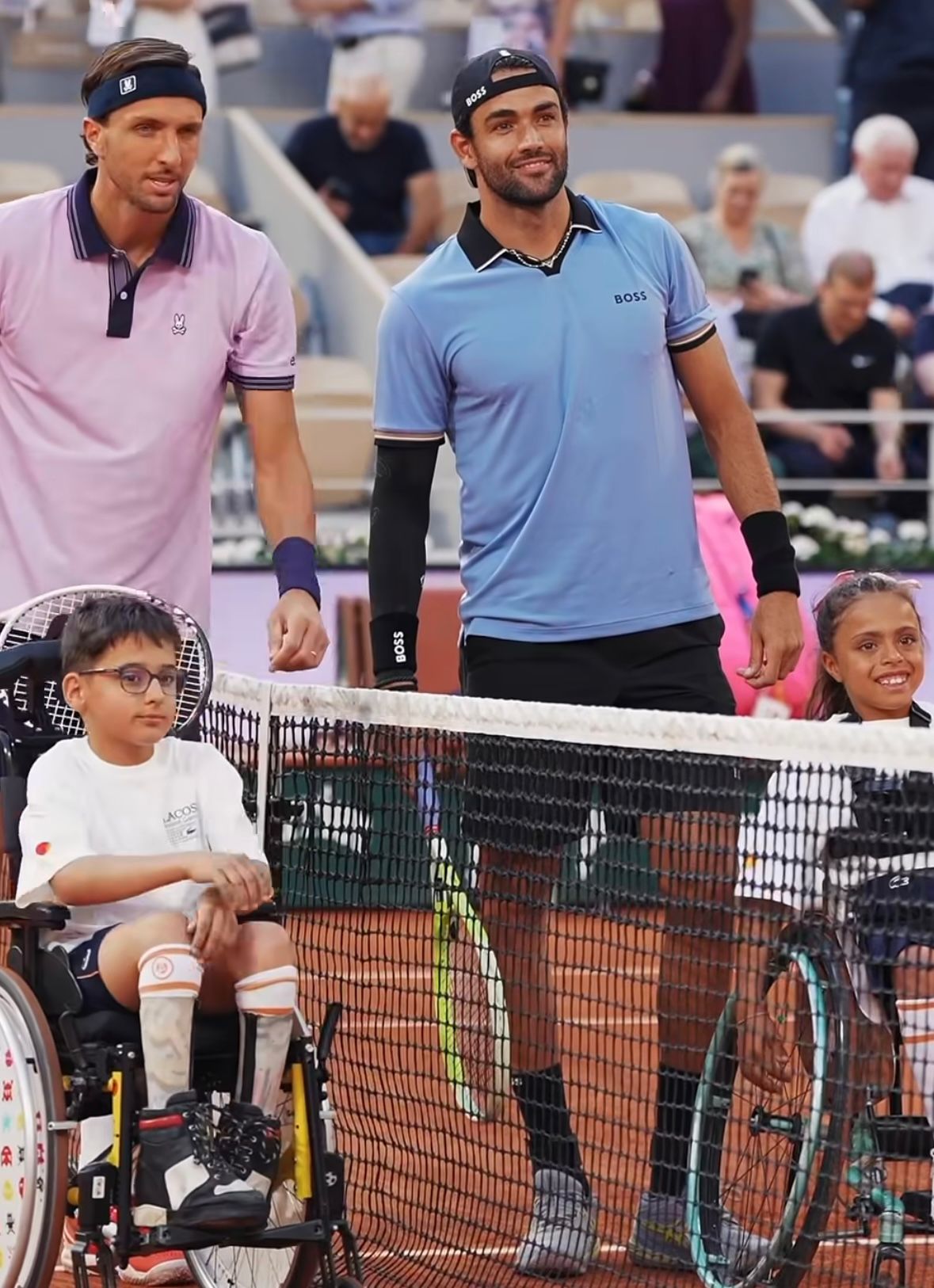
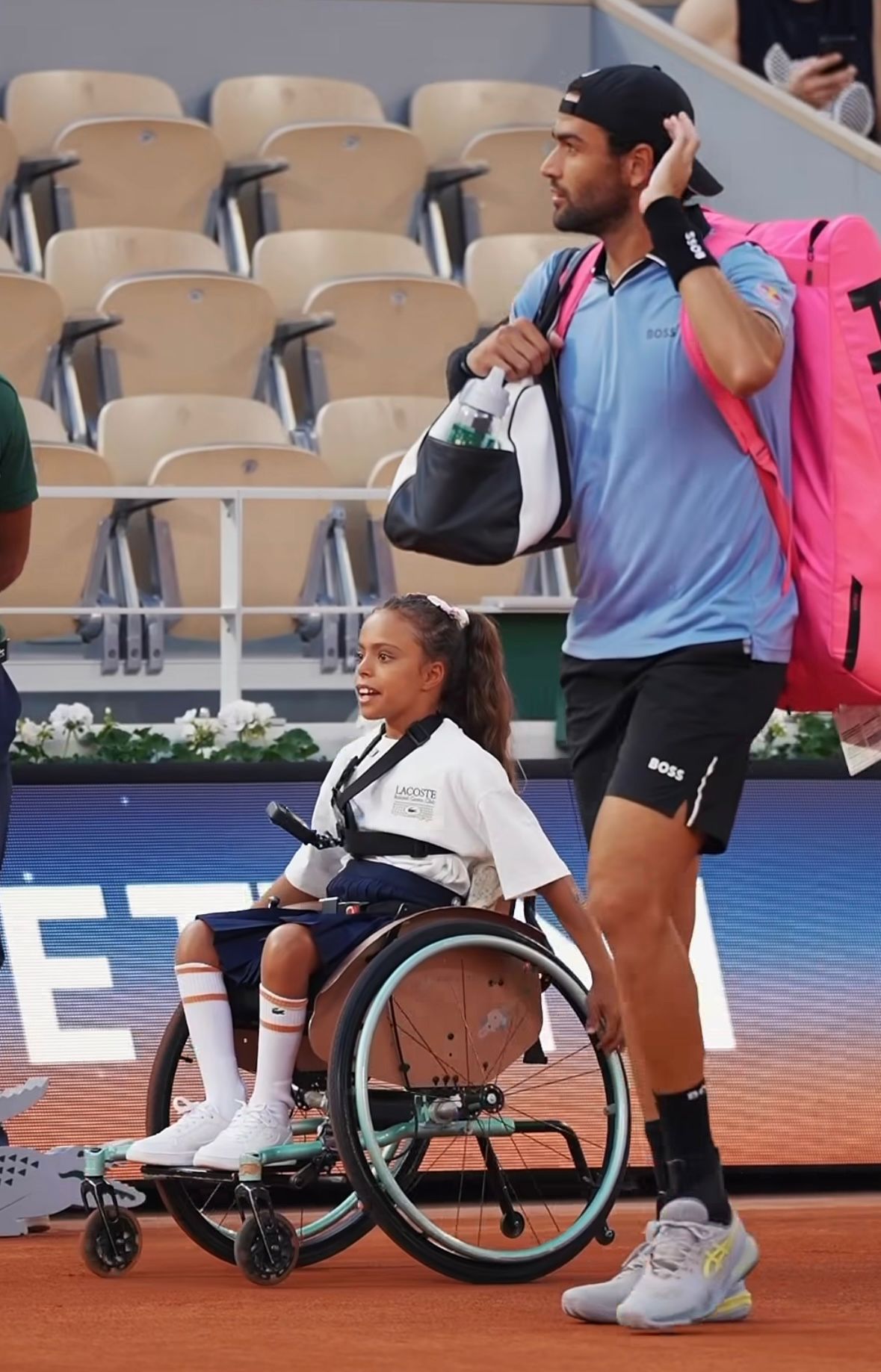
At Roland Garros 2026, during a men’s main draw night session on Court Philippe-Chatrier, two young wheelchair users were part of the player walk on ahead of Arthur Rinderknech’s match against Matteo Berrettini. It was a brief moment, but an important one, because it placed wheelchair user visibility within the everyday setting of a major Grand Slam match.
That context is important. This was not part of a disability specific event or a separate awareness campaign. It happened in the main draw environment, before a high profile men’s singles match, in one of the most recognisable venues in world tennis. Inclusion is at its strongest when it is not pushed to the side, but seen naturally within the full sporting landscape.
Roland Garros had already shown leadership in this space in 2025, when wheelchair users Marceau le Tallec and Cléo Ginterdaele were included as ball kids during the wheelchair tennis event. That was a significant step, showing how traditional roles in sport can be adapted and opened up with the right planning and mindset.
The more recent main draw moment carries a different significance. It shows wheelchair users present in a setting where disability was not the focus of the match, the event or the broadcast. That kind of visibility matters because it helps move inclusion beyond designated spaces and into the wider culture of sport.
Parity in sport is not only about competition formats or medals. It is also about presence, access and belonging. It is about ensuring disabled people are visible across the full sporting environment, from the field of play to the volunteer team, from coaching and officiating to event presentation and leadership.
Sport has a responsibility to ask who is seen, who is included and who is given the chance to be part of the occasion. When young wheelchair users are present in a main draw Grand Slam setting, it sends a simple but powerful message to others watching: sport is a place where you should expect to belong.
This also speaks to the wider legacy of Paris 2024. The Paralympic Games did not create this moment, and it would be too simple to claim that they did. But Paris 2024 helped challenge public perceptions of disability and brought Para sport, disabled excellence and accessibility into sharper focus. Its legacy should not only be measured in medals, memories or packed stadiums, but in how sport continues to think and act afterwards.
Moments like this suggest that the conversation is moving in the right direction. They show a mindset being challenged in the best way: not through a grand statement, but through practical, visible inclusion in spaces where people who have a disability have not always been expected to appear.
For young wheelchair users watching, that matters. It can shape how they see their own place in sport, encourage families, clubs, schools, governing bodies and event organisers to think differently about access and opportunity.
The challenge now is for more events, more organisations and more decision makers to build on that idea. People with a disability should not only be visible when disability is the subject. They should be visible because they are part of the sporting community.
That is what this Roland Garros moment captured: inclusion in plain sight, and a glimpse of what parity can look like when sport chooses to make room.